Dimensional Weight Calculator
Dimensional weight, also known as DIM weight or volumetric weight, is a billing methodology used by shipping carriers to ensure they accurately account for their cost to ship larger packages. Dimensional weight is calculated by a formula that utilizes the shipment’s dimensions and a Dim factor set by the individual shipping carrier.
Calculate Your Dimensional Weight
Get a quote for your product’s likely shipping cost.
Use a scale to determine the physical weight of the ready-to-ship package.
01
Measure the length, width, and height of the box. Make sure you always round up the results. For instance, the length of the package is 24.25, round it up to 25.
02
Use the dimensional weight calculator below to determine the base cost to ship the package for each shipping carrier.
03
Height
8 cm
Length
8 cm
Width
8 cm
Length
Width
Height
cm
Actual Weight
lbs =
oz =
kg
Max Econ
Max Standard
MAX Supplements Shipping
YunExpress Standard
YunExpress Priority
Shipping Time
7-15 Days
5-10 Days
7-15 Days
7-15 Days
5-7 Days
Billed Weight
0
0
0
0
0
Price
0
0
0
0
0
Product Examples
Stuffed Animal
Lron
Stuffed Animal
Stuffed Animal
Actual Dimensions
11"x 6" x 4"
11"x 6" x 4"
11"x 6" x 4"
11"x 6" x 4"
Actual weight
0.6 lbs
0.6 lbs
0.6 lbs
0.6 lbs
DIM Weight
Economy
2 lbs
2 lbs
2 lbs
2 lbs
DIM Weight
Standard
2 lbs
2 lbs
2 lbs
2 lbs
DIM Weight
2-Day
2 lbs
2 lbs
2 lbs
2 lbs
Billable Weight
Economy
0.6 lbs
0.6 lbs
0.6 lbs
0.6 lbs
Billable Weight
Standard
0.6 lbs
0.6 lbs
0.6 lbs
0.6 lbs
Billable Weight
2-Day
2 lbs
2 lbs
2 lbs
2 lbs
DIM Weight
International
2 lbs
2 lbs
2 lbs
2 lbs
Why Do Shipping Carriers Utilize Dimensional Weight?
Shipping carrier business models are centered around loading as many packages into a truck or airplane as they possibly can. As you can imagine, carriers can load many more packages containing smartphones onto a plane than packages containing feather pillows. The carrier’s capacity is significantly constrained by the boxes of pillows, even if both packages are the same physical weight.
Leveraging dimensional weight calculations, carriers can accurately reflect a package’s impact on their network capacities. Ultimately their goal is to max their revenue, and charging packages solely on the physical weight does not allow for this, which is why they implemented dimensional weight.
When is Dimensional Weight Applied?
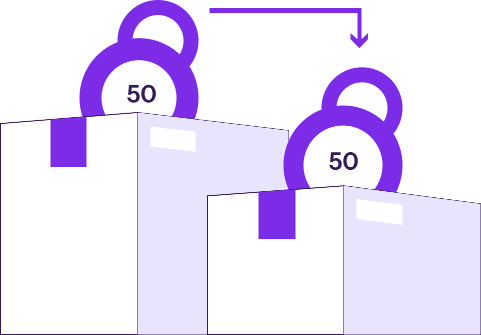
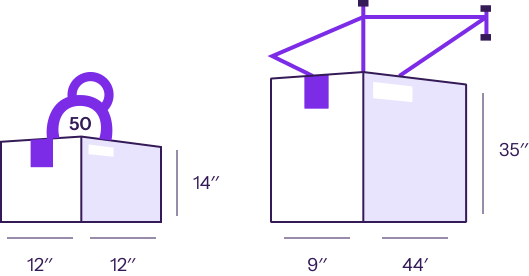
Dimensional weight is applied whenever the physical weight of the package is less than its calculated dimensional weight. If you’re shipping something heavy and compact like a kettlebell, the shipment will typically be billed based on the physical weight of the package. Conversely, when shipping a light and bulky item, like a lightweight bike frame, it is more likely to be billed for dimensional weight.
Kettlebell
Actual Weight = 50 lbs
DlM Weight=(12x12 x14)/139=15 lbs
Billable Weight: Actual
Titanium Bike Frame
Actual Weight = 5 lbs
DIM Weight=(44x9x35)/139=100 lbs
Billable Weight: Dimensional
* We're using the UPS/FedEx dim factor of139 in the above example.
Length
Width
Height
Pro Tip:
Make sure you always round up the results. For instance, the length of the package is 24.25, round it up to 25.
How is Dimensional Weight Calculated?
Determine the package dimensions, and divide by a DIM Factor:
(Parcel Height x Parcel Width x Parcel Length)/DIM Factor = DIM Weight*
*Rounded up to the nearest whole number
To calculate dimensional weight, measure the length, width, and height of the package. Then multiply the results to obtain the cubic size of your package.
Depending on the carrier, you’ll divide the total cubic inches by their unique dimensional weight divisor or “DIM factor”. FedEx and UPS use a DIM factor of 139 DHL and USPS use a DIM factor of 166 (for packages larger than 1,728 cubic inches (or 1 cubic foot). So if you ship that box domestically via UPS, its dimensional weight equals 74 lbs (or 10,240 divided by 139).
Here’s an example: You have a box measuring 40 in x 16 in x 16 in. Now multiply the three dimensions — 40 times 16 times 16 — which equals 10,240 cubic inches.
How Does Max Reduce Dimensional Weight?
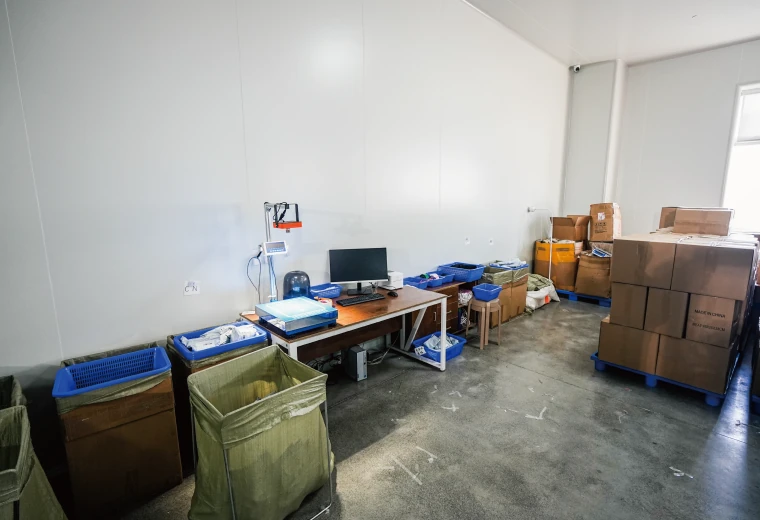
Reducing dimensional weight starts with minimizing every inch of unused space. MAX’s smart packaging algorithm automatically selects the smallest suitable box or mailer for each order. Our operations teams are trained to use the most efficient materials to optimize space and lower shipping costs. If needed, we can even remove products from their original packaging to further shrink parcel size. When you ship with MAX, these small reductions add up to significant savings.